
For years, the standard advice for lowering blood pressure has been the same: take your medication, cut the salt, walk 30 minutes a day. Dr. Gupta says that advice misses the real problem entirely — a hardened, calcified layer building up inside your arterial walls called "arterial cement," and the reason no prescription was ever formulated to dissolve it.
You have followed every recommendation — and the number still won't come down consistently
Your doctor keeps adjusting the dose — a higher amount, a second pill — while calling it "well managed"
You wake up at night with your heart pounding and wonder how much longer your heart can keep compensating
You have a family history and quietly wonder if you are following the same path
The Invisible Culprit Your Pills Were Never Built to Touch
In March 2024, Italian researchers published a landmark study in the New England Journal of Medicine. They opened the clogged arteries of 257 patients and sent the material inside for analysis. What came back was not just fat or calcium. Inside every artery examined, they found microplastics — particles that have been accumulating inside the human body for decades, and that no standard test has ever screened for.
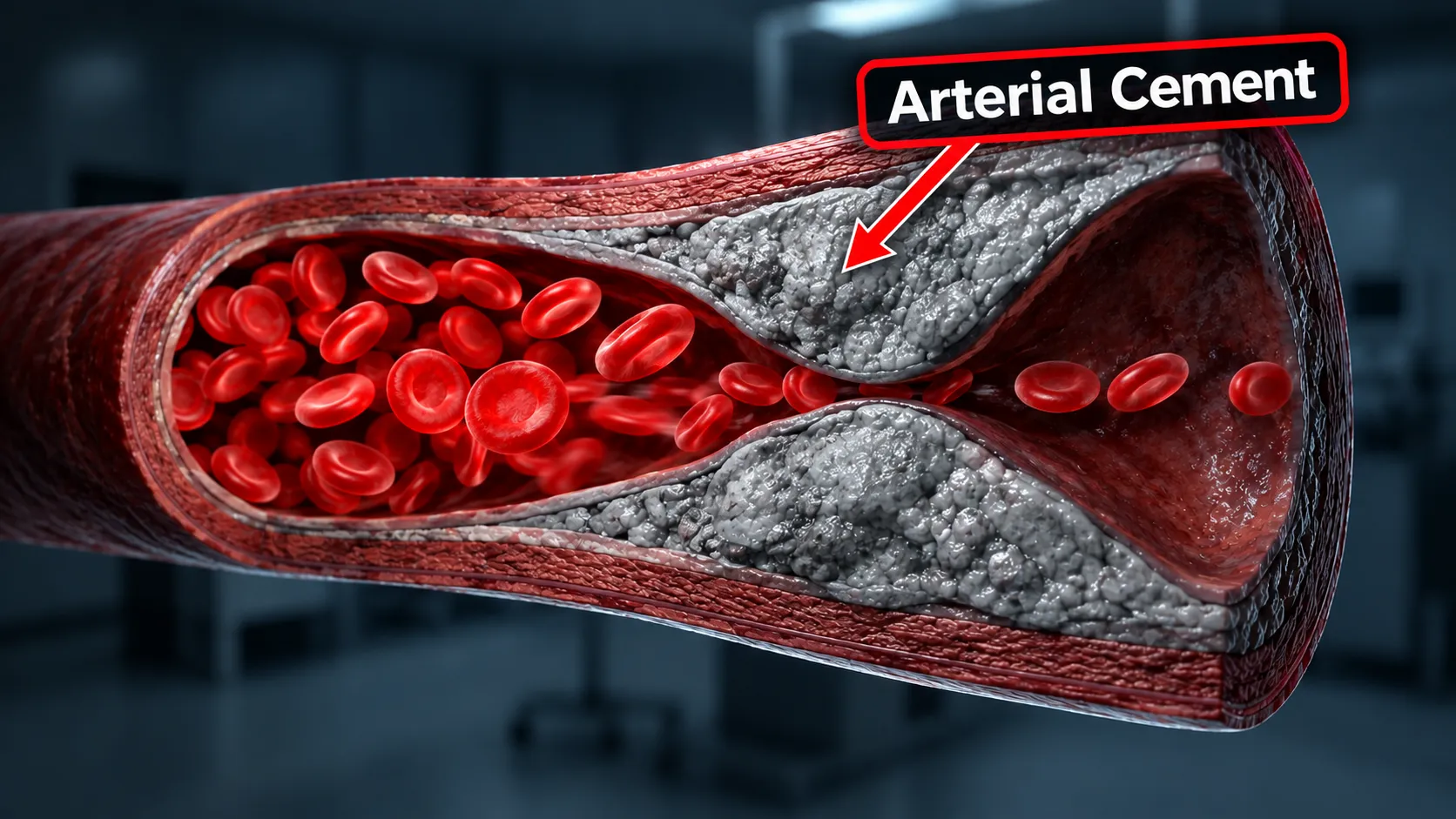
What researchers found inside the arteries of patients with uncontrolled blood pressure. The hardened crust — what Dr. Gupta calls "arterial cement" — narrows the channel until the heart has to work significantly harder to maintain circulation.
Free · Independent research · No sign-up required
The Island Where the Numbers Tell a Different Story
If microplastics are the real culprit, then why do the people of Sardinia — a rugged island in the Italian Mediterranean — routinely reach their nineties with arteries that look decades younger than their age? They are not avoiding plastic. They are not on medication. And they are certainly not eating tasteless food.
Dr. Gupta and his research team spent weeks in the mountainous interior villages of Sardinia studying exactly this question. In the United States, nearly 1 in 2 adults lives with high blood pressure. In those Sardinian villages, the rate drops to fewer than 1 in 20. Same planet. Same microplastics in the air. A completely different picture inside their arteries.
Free · No sign-up required
What People Are Saying After Watching
"I have been frustrated with my blood pressure for over a decade. The arterial cement explanation was the first thing that actually made sense of why the standard approach wasn't getting results for me."
"My father sat through the full presentation without moving. Afterward he said it was the first time he understood what was actually happening — not just the number, but the reason behind it."
*Individual experiences shared with our editorial team. Not a substitute for medical advice. Results are not guaranteed and may vary.
She Did Everything Her Doctor Asked. Then Came the Morning She Will Never Forget.
Years of Following Every Protocol. What Dr. Gupta Found After His Wife's Emergency Changed Everything He Thought He Knew.
For years, Rebecca took her blood pressure support every single morning without fail. She walked an hour in the park each day. She cut the salt, measured her pressure three times daily, and showed Dr. Gupta the readings every night. He watched them — and said nothing. The numbers never moved.
160 over 110. 170 over 100. Their cardiologist said she was lucky — it would be worse without the pills. Rebecca stopped believing that.
It was their daughter's sixteenth birthday. They made pancakes, filled balloons, went to her bedroom door singing. When Rebecca reached to hand her daughter a plate, something tore through her chest. Her left arm gave out. The plate shattered. She was on the floor before anyone could catch her.
"She did everything right." — Dr. Gupta, to the on-call physician
In the ambulance, Dr. Gupta held her hand and stared at the heart monitor. The on-call physician's response that night changed the way he had thought about blood pressure for 25 years.
That night, sitting alone beside Rebecca's hospital bed, Dr. Gupta opened his laptop. What he found — in an island in the Mediterranean with one of the lowest rates of high blood pressure on the planet, even among people in their nineties — is something no cardiologist ever told Rebecca.
Free · No sign-up required